
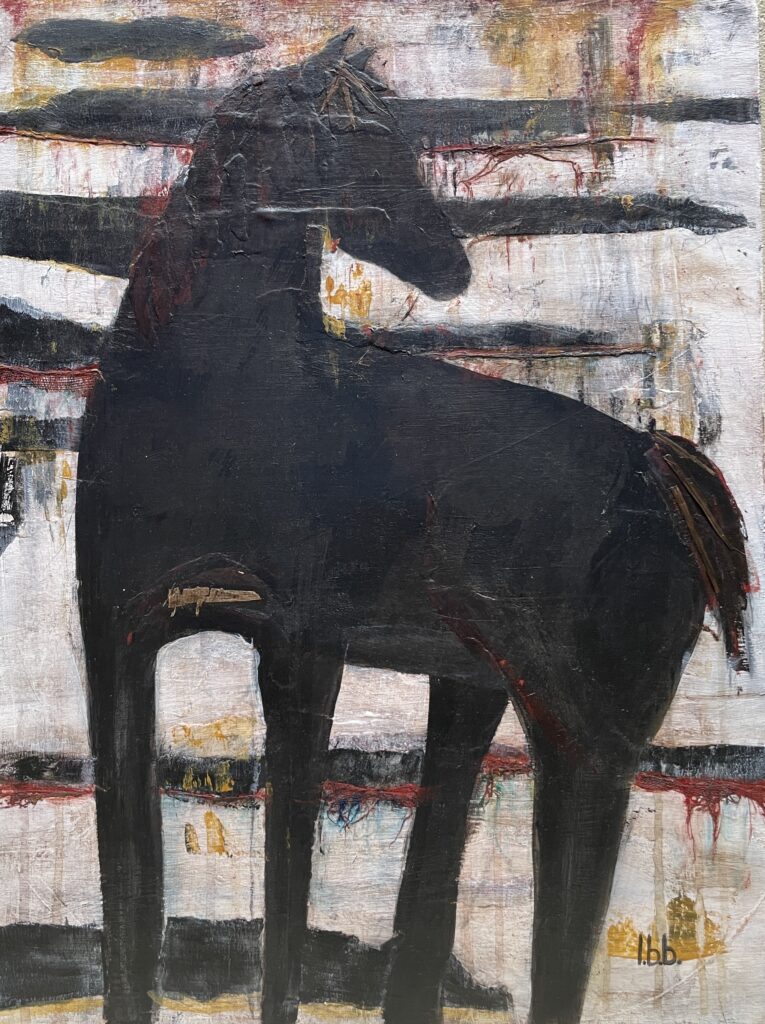
Black Horse invites us into an abyss, so that we can merge our light and shadow into wholeness. Have you accepted the invitation?
If not, know this:
Typically, events that beg serious attention are strong enough to tempt us toward despair. Therefore, it is difficult to see the void as positive. Still, to make peace with our paradoxes, an inner struggle is necessary.
For most people, the ongoing challenge is to release any association of dark with bad. It helps to think of shadow as your disowned parts. Will you welcome them home? These parts may be unknown to you, or strengths disguised as weaknesses.
When the abyss feels empty, think of a comforting image, a spiritual guide, there with you. As your relationship with Spirit grows in the quiet, fear and loneliness will begin to subside. Stay with this practice and eventually, you will experience moments of light, through oneness, that will offer value to the void, making it sacred.
If you have accepted a call into the sacred abyss, or experienced a dark night of the soul, Black Horse invites you to take a look back. Now that there is some space between past and present, what do you see?
How would you describe the shift in your energy?
What holds meaning for you now, that didn’t before?
In what ways has your time in the dark altered your response to the world?
At some point during this transformative journey, you will grow accustomed to living simultaneously with a strong sense of joy and undercurrents of grief. Not just personal grief, but grief over the collective. Refrain from hopelessness, for this is compassion. Remember: A strong vibration does not always appear excited.
The void, is where Spirit broods and creation happens. Who does not want to be comforted and to feel good? That said, it is in finding redemption in our ugliness and in our suffering that we become whole.
Though demanding, is Black Horse bad? For how can we truly love the other, until we have endured loss and learned to love our whole Self?
Making Spirit Flesh*
So, how can we be fully present to upsetting circumstances without becoming judgmental?
Consider The Zen Master Story, “We’ll See,” a Taoist fable, featured in the film, Charlie Wilson’s War.
“There was a little boy and on his 14 birthday he gets a horse; and everybody in the village says, ‘How wonderful the boy got a horse.’
…the Zen Master says, ‘We’ll see.’
Two years later the boy falls off the horse, breaks his leg and everybody in the village says, ‘How terrible.’
…the Zen Master says, ‘We’ll see.’
Then a war breaks out and all the young men have to go off and fight, except the boy can’t because his leg is all messed up. Everybody in the village says, ‘How wonderful.’
And the Zen Master says, ‘We’ll see…’”